

POSTER-SPECIAL SESSION 3

✦ SPECIAL SESSION ✦
✦ Modeling, Control and Optimization for Nonlinear and Multi-Agent Systems ✦
Lead Organizer

Zhinan Peng
Associate Professor · University of Electronic Science and Technology of China
Zhinan Peng is currently an Associate Professor with the School of Automation Engineering, University of Electronic Science and Technology of China (UESTC), Chengdu, China. He received the Ph.D. degree in control science and engineering from the School of Automation Engineering, UESTC, Chengdu, China, in 2020. From 2019 to 2020, he was a Visiting Scholar with the University of Auckland, New Zealand. His current research interests include multi-agent systems, reinforcement learning, exoskeleton robots, human-robot interaction, and robot control. He has published over 60 academic papers, including high-level journals such as IEEE Transactions on Industrial Informatics, IEEE Transactions on Neural Networks and Learning Systems, as well as top conferences in the field of control/robotics, such as ICRA, IROS, CDC, and IFAC. Prof. Peng was a recipient of the Best Conference Paper Finalist at the International Conference on Cognitive Systems and Information Processing (ICCSIP 2020 and 2022), the Best Paper Award in the journal of Control Theory and Technology. He was the Session Chair of the IFAC World Congress, the IEEE International Conference on Unmanned Systems, and the Chinese Control Conference. He has been serving as a reviewer for many international journals/conferences, such as IEEE TCYB, TNNLS, JAS, R-AL, IROS, ICRA, CDC, and ACC.
Co-Organizer
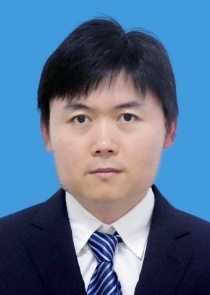
Junyi Wang
Professor · Northeastern University
Junyi Wang is a Professor, Doctoral Supervisor, and National High-Level Young Talent. His research interests cover consensus of multi-agent systems, cooperative control and intelligent perception of multiple underwater robots, distributed reinforcement learning and intelligent decision-making for swarm systems, as well as synchronization control of complex neural networks and their applications. He has presided over more than 10 vertical research projects, including national defense fundamental research programs, National Natural Science Foundation of China (NSFC) projects, and provincial/ministerial-level scientific research projects. He has published over 50 SCI journal papers. As the first inventor, he has obtained 11 authorized/pending national invention patents and 2 authorized national computer software copyrights. He was awarded one Liaoning Provincial Natural Science Award and has published one academic monograph. He is currently a Senior Member of the Chinese Association of Automation, an IEEE Senior Member, a Youth Committee Member of the Guidance, Navigation and Control of the Chinese Society of Aeronautics and Astronautics, and a Standardization Expert of Shenyang City.
📮 Submission
Paper Submission System

Scan to Submit
📅 Deadline: October 12, 2026
Guest Editor
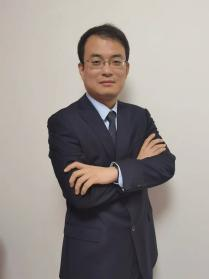
Jie Dong
Research Fellow · Beijing Institute of Spacecraft System Engineering
Jie Dong is a Research Fellow at the Beijing Institute of Spacecraft System Engineering (BISSE). He has long been engaged in research on system design of lunar and deep-space probes. He participated in the demonstration and development of China's Lunar Exploration Program and Planetary Exploration Program. Leading his team, he achieved breakthroughs in a suite of core technologies including the four-stage deceleration system for Mars entry, descent and landing (EDL), Mars aerobraking technology, engineering modeling of Martian atmospheric and surface environments, adaptive methods for large-dynamic conditions, as well as high-fidelity simulation and ground verification technologies, all of which have been widely deployed in engineering applications. These achievements have provided vital technical support for the implementation of the Lunar Exploration Program, the successful soft landing of Tianwen-1 on the Martian surface, and the development of critical technologies for the Tianwen-3 Mars sample-return mission.
Guest Editor
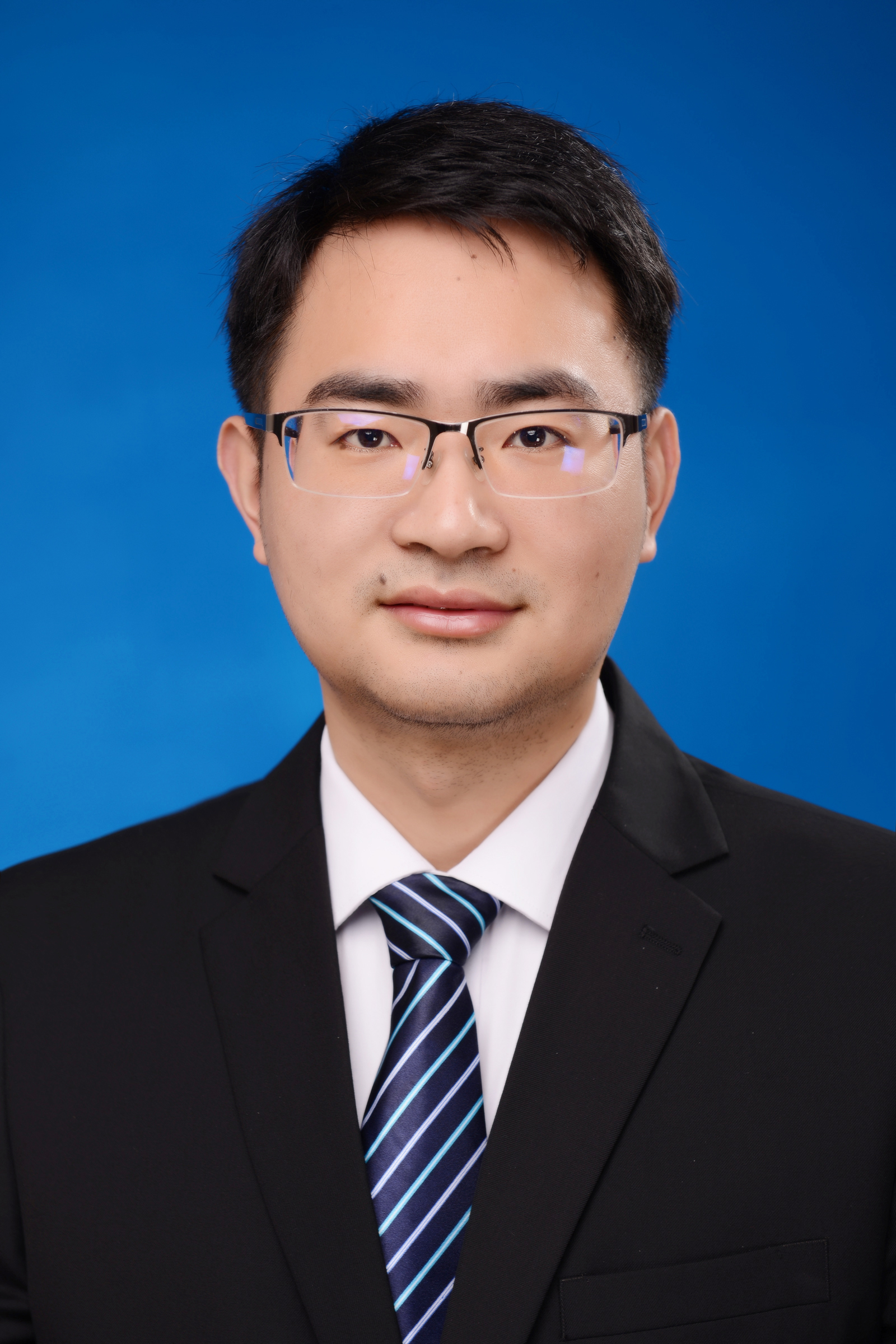
Shuai Fan
Associate Professor · Chengdu University of Technology
Shuai Fan is an Associate Professor and Ph.D. Advisor serving as the Director of the Research Center of the Embodied Intelligence Technology and Systems and the Deputy Head of the Department of Mechanical Engineering at Chengdu University of Technology (CDUT). He holds multiple prestigious affiliations, including Distinguished Researcher at the Tianfu Cosmic Ray Research Center, Deputy Director of the Sichuan Provincial Engineering Technology Research Center for Intelligent Rehabilitation Medical Devices, and Deputy Director of the Sichuan Provincial Engineering Research Center for Rehabilitation Robotics (Competitive Selection Mechanism). He is also an active committee member of the Construction Robotics Professional Committee of the Chinese Association of Automation (CAA) and the Robotics Professional Committee of the Sichuan Provincial Institution of Mechanical Engineering. Shuai Fan's research focuses on the kinematic modeling and application of parallel manipulators, exoskeleton robots, rehabilitation robots, and construction robots.
Modeling, Control and Optimization for Nonlinear and Multi-Agent Systems
Introduction
Robots and multi-agent systems have been extensively applied in intelligent manufacturing, low-altitude swarms, emergency rescue and other complex dynamic scenarios. Collaborative intelligent decision-making and global optimization are the core guarantees for efficient unmanned operations. Foundation models, multi-agent reinforcement learning and distributed control continuously improve system perception and planning capacity. Nevertheless, practical obstacles including dynamic disturbances, limited communication, task conflicts, human-machine incompatibility and lack of interpretable decisions restrict real-world deployment. This special session focuses on core scientific issues and technical bottlenecks of robot and multi-agent collaborative systems. It gathers global scholars to exchange advanced algorithms, system architectures and engineering practices, advancing theoretical innovations and industrial transformation of collaborative decision-making, adaptive optimization and trustworthy intelligence.
Robots and multi-agent systems have been extensively applied in intelligent manufacturing, low-altitude swarms, emergency rescue and other complex dynamic scenarios. Collaborative intelligent decision-making and global optimization are the core guarantees for efficient unmanned operations. Foundation models, multi-agent reinforcement learning and distributed control continuously improve system perception and planning capacity. Nevertheless, practical obstacles including dynamic disturbances, limited communication, task conflicts, human-machine incompatibility and lack of interpretable decisions restrict real-world deployment. This special session focuses on core scientific issues and technical bottlenecks of robot and multi-agent collaborative systems. It gathers global scholars to exchange advanced algorithms, system architectures and engineering practices, advancing theoretical innovations and industrial transformation of collaborative decision-making, adaptive optimization and trustworthy intelligence.
✦ Research Topics (include but not limited to)
- Multi-modal perception and end-to-end autonomous decision optimization for single robots
- Distributed collaborative game, task allocation and sequential planning for multi-agents
- Multi-agent collaborative algorithms based on reinforcement, imitation and preference learning
- Multi-agent fusion perception and dynamic coordination strategies under communication constraints
- Human-in-the-loop shared autonomous control for robot-multi-agent systems
- Safety constraints, interpretable decision-making and verification of multi-agent systems
- Digital-to-real transfer training and optimization for multi-agent collaboration
- Industrial, medical and security applications of robot multi-agent systems

